A new, error-corrected method for detecting cancer from blood samples is much more sensitive and accurate than prior methods and may be useful for monitoring disease status in patients following treatment, according to a study by Weill Cornell Medicine and New York Genome Center investigators….
Category: 5. Health
-

Amgen’s First CTO Has Big Plans For AI–And An AI Head From Nike to Help Fulfill Them
Amgen’s Sean Bruich, senior vice president of artificial intelligence and data, (left) and chief technology officer David Reese: “Most of the talent [in AI] lies outside biopharma, not within it,” Reese said.
Amgen
When Dr. David Reese, Amgen’s first chief technology officer, set about hiring a…
Continue Reading
-
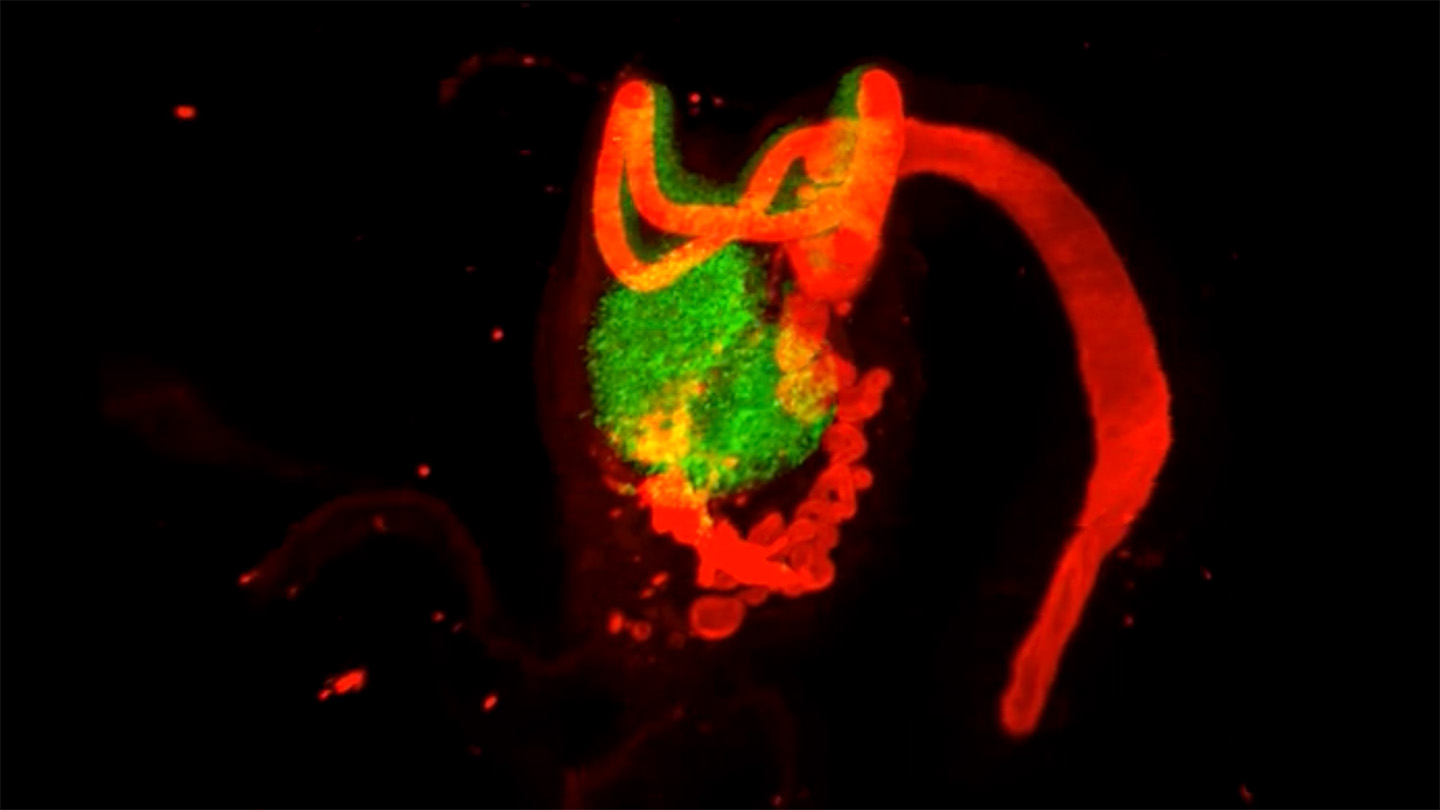
An overlooked organ may help the ovary function
When an expansive curlicue of tissue sitting below the ovaries was discovered more than a century ago, it was dismissed as useless and erased from biology textbooks. Biologists now are taking a new look at the structure and its potential role.
The rete ovarii seems to communicate…
Continue Reading
-

How Health Insurers Can Fix The Broken Patient Experience
Dominique Entzminger, a physician assistant of family medicine, wears a stethoscope during an … More
In response to mounting scrutiny over medical claim denials and patient experience, Cigna Group recently announced plans to simplify…
Continue Reading
-

Pornography may be commonplace, but a growing body of research shows it causes lasting harm to the brain and relationships
While pornography has been present throughout human history in various forms, such as ancient erotic art to more modernized motion pictures, research shows an increase in use over recent decades given the rise of technology and accessibility.
Pornography, meaning any media intended to…
Continue Reading
-

1,701 Pounds Of Butter Recalled Due To Possible Fecal Contamination
Agri-Mark is voluntarily recalling 186 cases or 1,701 pounds of its Extra Creamy Premium Butter, Sea … More
When buying butter, you typically don’t say, “I’ll take the one that may have…
Continue Reading
-

Immune protein modification blocks viral replication, heart inflammation
Cleveland Clinic virology researchers have found that a specific protein modification to the immune protein MDA5 is key to how human bodies detect and respond to viruses and viral replication.
The PNASpublication explains how two protein modifications activate MDA5, an essential immune protein,…
Continue Reading
-
Brain study increases understanding of what triggers drug use relapse
New research on the biological basis of addiction has found that the critical epigenetic enzyme histone deacetylase 5 (HDAC5) limits the expression of the gene Scn4b, regulating neuronal activity and thereby the formation of strong drug-related memories, which can trigger relapse in individuals…
Continue Reading
-
Scientists develop process using molecules in the cell to identify environmental signals
Scientists have transformed RNA, a biological molecule present in all living cells, into a biosensor that can detect tiny chemicals relevant to human health.
Research by Rutgers University-New Brunswick scientists centers on RNA, a nucleic acid that plays a crucial role in most cellular…
Continue Reading
-
Study provides scaffold to selectively target drug breakdown process
Scientists at St. Jude Children’s Research Hospital explored selectively blocking the CYP3A4 protein responsible for breaking down large swaths of approved drugs, providing a way to improve drug efficacy.
Cytochrome P450 (CYP) proteins are responsible for breaking down more than 80% of all Food…
Continue Reading